


Personal Wealth Management / Politics
Blunting Burnham?
The UK’s new prime minister is off and rolling … with a small tax cut.

Editors’ Note: MarketMinder Europe is politically agnostic. We prefer no party nor any politician and assess developments for their potential economic and market implications only.
Here is a dirty little secret we have observed: Politicians, regardless of country or party, will usually say anything to get elected … then proceed to do next to nothing in office. Not that they are all liars who enter office intending to do nothing,[i] but governing is hard. Corralling a legislature is hard. Making the maths work is hard. And soon the need to be re-elected arises, and no one wants to upset the apple cart, in our experience, so they drift along. We have seen that most of what investors hoped or feared doesn’t happen, or it gets sanded down into oblivion. And whilst it is early days, it seems new UK Prime Minister Andy Burnham is already heading down this well-trod path—which we suspect will likely be to markets’ delight.
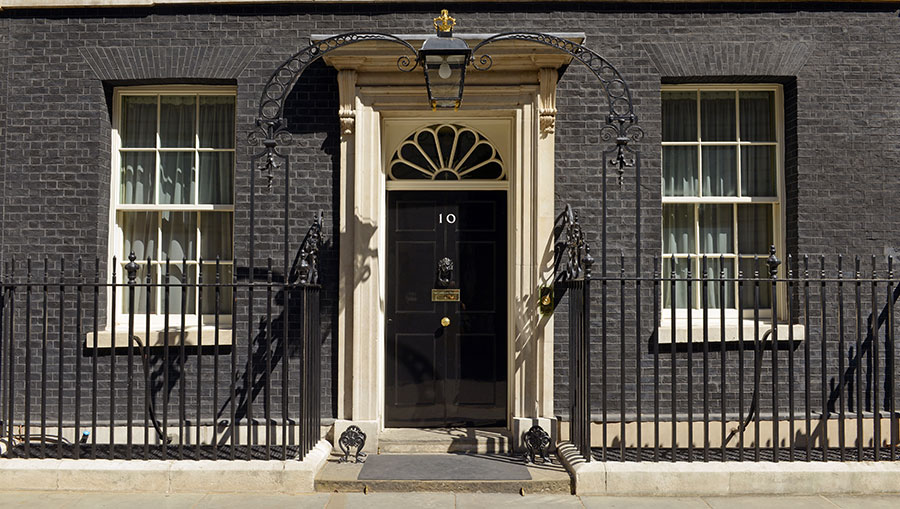
Our research finds markets don’t play party politics. They don’t care about personalities or ideology and don’t deal in terms like left and right. But people do, and as Burnham progressed from Manchester Mayor to would-be challenger to former PM Keir Starmer to leader-in-waiting and then, yesterday, to No. 10, a potential lurch to the left preoccupied headlines in financial outlets we follow. Not because Burnham actually proposed economic policies traditionally associated with leftism—big tax hikes and runaway spending, basically—but because of offhand comments from him and his inner circle, sometimes years before. If anyone advising Burnham on tax said even half a sentence about tax hikes in the last 15 years, boom, commentators we follow would claim tax hikes are on his policy shortlist. If Burnham once told a journalist Britain overtaxes work and undertaxes capital, boom, draconian wealth and capital gains taxes must be on the way, according to coverage we track. And if Burnham talks of bringing utilities under greater “public control,” boom, everything is about to get nationalised, to hear analysts tell it.[ii]
Little of this appeared to be grounded in fact. We found it was mostly innuendo. It was also mere possibility, and our research finds markets move most on probabilities. But chatter and possibility set expectations, setting the sentiment half of markets’ tendency to move on the gap between sentiment and reality. In Burnham’s case, if headlines we see are any indication, expectations were low.
Now reality is setting in, and we think it is already surprising to the upside. For the last month, headlines we follow have been preoccupied with whom Burnham would appoint as Chancellor of the Exchequer, putting them in charge of fiscal policy. Conversation centered on Ed Miliband, the former Labour leader who lately served as Energy Secretary and halted oil and gas licencing in the North Sea.[iii] By reputation he hails from Labour’s left wing, and he reportedly lobbied hard for the Treasury post. Oodles of articles warned of the fiscal doom that would come once he started writing the Budget. Only, when Burnham unveilled his cabinet Monday, Miliband moved to Foreign Secretary and former Defence Secretary John Healey got the Chancellor nod.
Healey does not have a leftist reputation. Based on the profiles we have read, he is seemingly a centrist. He served as a junior minister in the Treasury in 2002 – 2007, where he helped craft regional growth policies for Tony Blair and Gordon Brown. That looks to us like a very centrist, pro-market pond to incubate in. It also seemingly gives him the policy experience to assist with one of Burnham’s flagship aims, devolving more power to cities and regions to direct local public investment for improved return. We reckon it is all kind of boring. It is also seemingly the status quo, considering the local investment drive started under Conservative Prime Minister David Cameron, then continued under Boris Johnson and Starmer.
Now, we think it is again a mistake to overrate personality, so take all that with a grain of salt. However, things also appear to be shaping up better than many commentators we follow warned on the tax front. On Tuesday, Burnham announced his first policy. It was … a tax cut, perhaps the tiniest one in the history of mankind, but a cut. From October, value-added tax on household energy bills will drop, saving households about £45 annually.[iv] Obviously, this isn’t a gamechanger, but Burnham cast it as a down payment on more to come. Ending the freeze on income tax bands is reportedly also high on his list: In interviews this week, he called this stealth tax hike the number one issue voters raised when he was campaigning for last month’s Makerfield by-election and spoke of raising the tax-free allowance at least. It has been frozen at £13,000 since 2021. Whilst his people subsequently briefed reporters that a change isn’t imminent, we find it noteworthy that the initial instinct is to cut, not hike.[v]
Naturally, this set off warnings from commentators about the deficit and unfunded tax cuts, echoing the blowback we observed against former Prime Minister Liz Truss’s 2022 mini-budget. Some commentators warn Burnham will negate any tax relief for lower-income households with higher taxes on wealthier people—maybe higher top income tax rates, maybe higher capital gains taxes, maybe a wealth levy. Burnham, for his part, hasn’t said anything concrete on this beyond citing his need to review the government’s books and saying any actual tax hikes are a matter for another day far in the future.[vi] That is, in our view, politicianspeak for kicking an issue into the long grass. And you know what else is in the long grass? Another election, with Reform UK looming atop public polling.[vii] We suspect that is an incentive to tinker at the margins of fiscal policy, much as we found Reeves and Starmer did, lest the aforementioned apple cart flip over.
In the near term, chatter and speculation will probably reign. Parliament is heading on its traditional summer recess, opening the silly season of rumours and policy trial balloons. Reeves seemed to use this period strategically, testing markets’ reaction to tax ideas, then backing off if UK stocks and Gilts didn’t appear to like them. We think it helped keep expectations low and tax changes more modest than markets feared. That was enough to keep pushing UK stocks up the wall of worry, and we doubt that changes under Burnham.[viii] The new boss, we reckon, will probably be a lot like the old boss.
[i] We will let you decide on the percentage that are.
[ii] “What Does Andy Burnham Mean by More ‘Public Control’ of Utilities? He Is too Vague,” Nils Pratley, The Guardian, 3/6/2026.
[iii] “Ed Miliband Orders Ban on New North Sea Licences,” Louise Wilson, Holyrood, 11/7/2024.
[iv] “What Will Andy Burnham’s VAT Cut on Electricity Bills Mean for You?” Hilary Osborne and Jillian Ambrose, The Guardian, 21/7/2026.
[v] “Where Will Andy Burnham Find the Money to Fund His Spending Pledges?” Richard Partington, The Guardian, 21/7/2026.
[vi] “Gary Lineker Meets Andy Burham,” Goalhanger podcast, 15/7/2026. Accessed via YouTube.
[vii] Source: Politico, as of 21/7/2026.
[viii] Source: FactSet, as of 21/7/2026. MSCI UK IMI return with gross dividends, 4/7/2024 – 17/7/2026.
Get a weekly roundup of our market insights.
Sign up for our weekly e-mail newsletter.

You Imagine Your Future. We Help You Get There.
Are you ready to start your journey to a better financial future?

Markets Are Always Changing—What Can You Do About It?
Get tips for enhancing your strategy, advice for buying and selling and see where we think the market is headed next.
Related Resources
-
Politics Blunting Burnham?2026-07-22
-
Economics Don’t Doubt the Old World2026-07-17
-
In The News Thinking of investing in an IPO? Read my golden rule first2026-07-16
-
Politics Long-Term Forecasts and Court Verdicts: The Latest in British and French Politics2026-07-14




Contact Us
Learn why 210,000 clients trust Fisher Investments and its affiliates to manage their money and find out how we may be able to help you achieve your financial goals.
As of 30/06/2026. Includes Fisher Investments and its affiliates.
New to Fisher? Call Us.
Contact Us Today