


Personal Wealth Management / Market Analysis
Chart of the Day: Oil’s Substitution Effects, Illustrated
A quick glance at correlations suggests markets are pre-pricing substitution from elevated oil prices—not broad inflation.

Since the outbreak of war with Iran in late February, spiking oil prices have spurred broad-based fears of inflation possibly resurging. We have long argued, however, that absent rapid money supply growth to drive prices broadly higher economywide, elevated oil and gas prices are much more likely to cause substitution. For discretionary items—especially some of life’s luxuries—consumers are likelier to delay, defer or downsize consumption.
This is the scenario we see today. US M4 money supply grew 5.9% y/y in April—a tame rate in line with prepandemic trends.[i] That was a low inflation period. Europe’s rates are slower still.
And markets seem to be pre-pricing at least some substitution ahead. Our Chart of the Day illustrates just that, plotting the rolling 13-week correlation coefficient between the MSCI World Textiles, Apparel and Luxury Goods Industry’s weekly percentage change and Brent crude oil’s. For the uninitiated, correlation coefficients measure the relationship between two variables’ movements. A 1.00 correlation shows the two move in lockstep: When X rises, Y rises, too. A -1.00 correlation shows the two moving exactly opposite. When X rises, Y falls.
These relationships aren’t fixed and will vary with outside influences … like a war. As our chart displays, the correlation coefficient between this highly discretionary industry and oil prices has absolutely plunged since war broke out, sitting at -0.93 presently. In our view, this looks like the stock market pre-pricing the effect of substitution on demand for the category’s goods. It illustrates how high and rising oil prices can be offset elsewhere by consumer behavior. And why, therefore, oil alone doesn’t dictate inflation trends.
Exhibit 1: The Market Pre-Prices the Substitution Effect
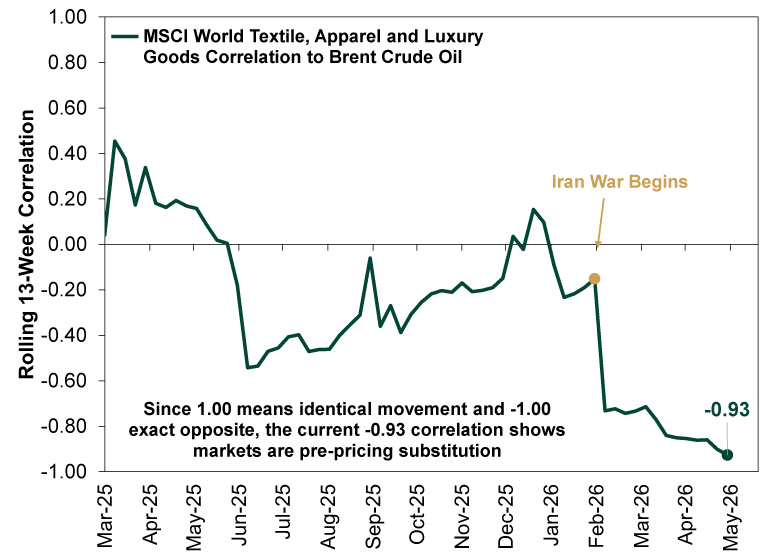
Source: FactSet, as of 6/3/2026. Rolling 13-week correlation coefficient of MSCI World Textile, Apparel and Luxury Goods Industry price-level percentage change and Brent crude oil percentage change, weekly, 3/28/2025 – 5/29/2026.
[i] Source: Center for Financial Stability, as of 6/3/2026.
If you would like to contact the editors responsible for this article, please message MarketMinder directly.
*The content contained in this article represents only the opinions and viewpoints of the Fisher Investments editorial staff.
Get a weekly roundup of our market insights
Sign up for our weekly e-mail newsletter.

You Imagine Your Future. We Help You Get There.
Are you ready to start your journey to a better financial future?
Where Might the Market Go Next?
Confidently tackle the market’s ups and downs with independent research and analysis that tells you where we think stocks are headed—and why.
Related Resources
-
Politics Context for the Noisy Congress to Come2026-10-09
-
Interesting Market History Notes on a Bear Market Anniversary2026-10-09
-
Economics Checking in on US Consumers2026-10-08
-
Politics Two Elections in the Americas—and Spain’s Coming Snap Vote2026-10-06





Learn More
Learn why 210,000 clients trust us to manage their money and how Fisher Investments and its affiliates may be able to help you achieve your financial goals.
As of 9/30/2026
New to Fisher? Call Us.
Contact Us Today