


Personal Wealth Management / Retirement
Should I Max Out My 401(k) Plan?
Explore this Article:
- What Does It Mean To Max Out Your 401(k)?
- Benefits of Maxing Out Your 401(k)
- When NOT To Max Out Your 401(k)
- Other Considerations When Maxing Out Your 401(k)
- How Fiduciary Investment Advisers Can Help With 401(k) Planning
For many people, their workplace retirement plan is an essential vehicle for building wealth and supporting their lifestyles after they leave the workforce. The instinct to contribute as much as possible is understandable, but determining the right contribution level is not a one-size-fits-all calculation. It requires a nuanced understanding of your current income needs, projected lifestyle during retirement, cash-flow requirements and overall tax structure.
This article walks through what it actually means to “max out” your 401(k), the potential tax advantages and when you might or might not want to do it.
What Does It Mean To Max Out Your 401(k)?
To "max out" a 401(k) plan means contributing the full annual amount allowed by the Internal Revenue Service. These limits are not static; they are indexed to inflation and change periodically to reflect the shifting economic landscape.
It is important to distinguish between the various types of limits that govern workplace retirement plans. Most people focus on the employee contribution limit, which is the portion of your salary you defer into the account. However, there is also an overall plan limit that includes any employer contribution and after-tax contributions if your specific plan allows them.
Here are the updated figures for the 2026 tax year[i]:
2026 401(k) Contribution Limits
|
Contribution Type |
2026 Limit |
|---|---|
|
Employee Basic Deferral Limit |
$24,500 |
|
Catch-Up Contribution (Age 50+) |
$8,000 |
|
"Super" Catch-Up (Ages 60-63) |
$11,250 |
|
Total Limit (Employee + Employer) |
$72,000 |
Benefits of Maxing Out Your 401(k)
Maxing out your 401(k) plan can offer meaningful advantages, but how much it helps depends on your income, tax bracket and time horizon.
1. Tax Advantages Today and Tomorrow
Traditional 401(k) contributions are generally pretax, which can reduce taxable income now and allow investments to grow tax-deferred until withdrawals, when they’re taxed as ordinary income.
Roth 401(k) contributions use after-tax dollars, so there’s no upfront deduction, but qualified withdrawals in retirement are typically tax-free. Using both can support tax diversification by spreading savings across accounts that may be taxed differently under future tax rates. The core benefit is timing when you pay income tax, not avoiding it altogether.
2. Higher Retirement Savings and Compounding
Maxing out your 401(k) increases how much you save each year and how long those dollars can compound. Saving more earlier in your career can have a different impact than trying to catch up later. Most 401(k) plans offer a range of mutual funds and other investment options, so aligning your mix with your retirement goals, cash flow needs and time horizon is an important part of financial planning.
3. Income Source Flexibility
A 401(k) is one part of a broader retirement income picture that may also include Social Security, pensions, taxable accounts and other savings. A larger 401(k) balance can give you more flexibility—for example, in deciding when to claim Social Security or how to adjust withdrawals in volatile markets. It can also lead to larger required minimum distributions later, which affects ordinary income and tax planning. The right contribution level depends on how all your income sources work together.
When NOT To Max Out Your 401(k)
Despite the potential benefits, there are plenty of legitimate reasons some investors decide not to contribute up to the maximum amount.
1. Competing Financial Goals and Liquidity Needs
If you don’t yet have an emergency fund in a regular account, directing every spare dollar into a 401(k) may leave you short on liquidity before retirement. Big near-term goals—such as a home purchase, education costs or paying down high-interest debt—might also justify prioritizing a taxable account or other savings first.
If cash reserves are too thin, you may end up considering a 401(k) loan or hardship withdrawal in a pinch. Both can have long-term consequences for your retirement savings and potential tax costs, so some investors prefer to ensure they have adequate liquidity before maxing out 401(k) contributions.
2. Balancing Different Accounts and Contribution Limits
The 401(k) is one type of retirement savings plan, but you might also want to utilize another tax-favored vehicle with its own rules and limits. One example is an individual retirement account (IRA), which allows you to invest for retirement with more freedom than an employer-sponsored plan. The IRA limit for 2026 is $7,500 for many savers, plus a separate IRA catch-up limit for those 50 and older. However, there are limits to receiving a tax deduction on IRA contributions if you are covered by a retirement plan at work.
A health savings account (HSA), may be another option – allowing you to invest to cover future healthcare costs. A HSA, if you’re eligible, can sometimes compete with your 401(k) for dollars as well since HSAs can offer a unique triple tax benefit.
You may decide it makes sense to:
- Contribute enough to capture your full employer matching contribution
- Fund an individual retirement account or HSA up to the IRS limit
- Then decide whether additional retirement contributions should go toward maxing out your 401(k) or into a taxable account for more flexibility
The right sequencing depends on your tax bracket, the quality and cost of 401(k) investment options in your plan versus alternatives and your broader financial planning priorities.
3. Tax Considerations Now and Later
Because traditional 401(k) contributions reduce taxable income today, they can be especially appealing if you’re in a relatively high tax bracket and expect lower ordinary income in retirement. On the other hand, if you’re in a relatively low bracket now and expect higher income later, you might favor Roth 401(k) contributions or direct more toward Roth or other accounts.
Questions about future tax rates, the size of your 401(k) relative to other assets and your Social Security strategy are all part of this decision and best discussed with a tax professional. Maxing out is not automatically a tax win; it’s a trade-off that should be evaluated in context.
Assess the State of Your 401(k)
Request an Appointment
Other Considerations When Maxing Out Your 401(k)
If you decide that maxing out makes sense for your situation, below are a few additional considerations.
1. How to Max Out Your 401(k) through Payroll
Your contributions typically happen through payroll. You can divide the annual contribution limit by the number of pay periods to estimate what percentage of income to defer. Some investors increase their deferral rate each year or with each raise, making it easier to reach the maximum amount over time without straining monthly cash flow.
Monitoring your contributions throughout the year helps avoid accidentally overshooting the 401(k) contribution limit, especially if you change jobs midyear.
2. Understand Employer Contributions and Vesting
An employer contribution, whether as a match or profit-sharing, is separate from your own salary deferrals. Many investors view the match as “free money” or “immediate return” since it is additional compensation available only if you contribute enough to your 401(k).
Be sure you understand any vesting schedule attached to employer contributions. Leaving a job before you’re fully vested could affect how much of the employer’s retirement contributions you ultimately keep.
3. Coordinate Catch-Up and Special Age-Based Rules
If you’re age 50 or older, you may make catch-up contributions on top of the standard limit. For ages 60 to 63, a higher special catch-up applies. These rules can significantly increase how much you can contribute in those years, which might be important if you’re behind on retirement savings.
4. Consider How Your 401(k) Fits With Other Accounts
A 401(k) is usually one of several accounts in a household financial picture. Others might include:
- A taxable account such as a brokerage account
- One or more individual retirement accounts
- A health savings account (HSA), if eligible
- Business or trust accounts
Each type of account can be taxed differently. Aligning your overall mix with your financial goals is often more important than simply getting any one account, including a 401(k), to the maximum contribution level in a given year.
How Fiduciary Investment Advisers Can Help With 401(k) Planning
Maxing out your 401(k) can be a powerful choice for some investors. For others, it may be more effective to balance contributions across different accounts, maintain flexibility for unexpected expenses or focus first on other priorities.
Navigating markets, planning retirement income needs and timing withdrawal from your retirement accounts can be daunting. This is where a fiduciary investment adviser can provide significant value.
A fiduciary investment adviser works with you on an ongoing basis to provide investment advice that is in your best interest over your full client relationship, not just at the point of sale. When it comes to 401(k) decisions, that can mean strategic planning on:
- How your current 401(k) contributions align with your long-term retirement savings and income needs
- How traditional 401(k) and Roth 401(k) choices might affect income timing today versus later
- Whether you’re on track to meet your desired lifestyle based on your retirement plan assumptions
- What investments align with your desired goals for retirement
- How to coordinate withdrawals from your 401(k), individual retirement accounts, taxable accounts and other sources in retirement
Taken together, these considerations can help you decide whether maxing out your 401(k) fits your situation or if a different mix of retirement contributions makes more sense given your goals, timeframe and comfort with risk. The decision is less about following rules of thumb and more about building a retirement plan that supports the lifestyle you want and the flexibility you may need later on.
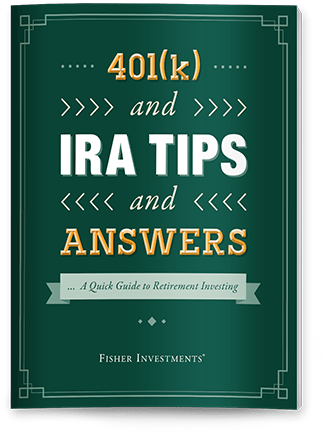
For more detail on how 401(k) and IRA decisions work together, download our free guide, 401(k) and IRA Tips and Answers.
If you’d like help evaluating your 401(k) contribution strategy in the context of your broader retirement plan, you can request an appointment with Fisher Investments.
[i] Source: Internal Revenue Service, as of 2/2/2026. 401(k) Limit Increase for 2026..
This article is for informational and educational purposes only and should not be construed as investment advice or a recommendation regarding any particular investment strategy or course of action. The information presented is general in nature and does not take into account the individual circumstances, objectives, or financial situation of any specific investor. We provide our general comments to you based on information we believe to be reliable. There can be no assurances that we will continue to hold this view; and we may change our views at any time based on new information, analysis or reconsideration. Some of the information we have produced for you may have been obtained from a third-party source that is not affiliated with Fisher Investments.
Fisher Investments has no duty or obligation to update the information contained herein.

You Imagine Your Future. We Help You Get There.
Are you ready to start your journey to a better financial future?
Insights & Media
-
Weekly Wrap-Up Fisher Investments Reviews: Last Week in Markets — October 5 - October 92026-10-12
-
Politics Context for the Noisy Congress to Come2026-10-09
-
Expert Commentary This Week in Review | S&P 500 Record High, Fed Minutes, Spain Election
 2026-10-09
 -
Interesting Market History Notes on a Bear Market Anniversary2026-10-09




Learn More
Learn why 210,000 clients trust us to manage their money and how Fisher Investments and its affiliates may be able to help you achieve your financial goals.
As of 9/30/2026
New to Fisher? Call Us.
Contact Us Today